Chun Ding
Chun Ding is an artist based in London. Her practice primarily employs paper-based painting, cyanotype processes and textiles, placing natural forms within the same frame as traces of technology to explore how seeing unfolds within matter, time and the body. She views images less as representations of reality and more as continuously evolving fields of perception, where light, materials and experience collectively shape meaning.
In The Space of Seeing (2025), the artist directs attention towards the act of “seeing” itself. The ink-and-coloured-pencil drawing on paper constructs a low-saturation visual space with restrained lines and hues. The imagery perpetually oscillates between emergence and dissipation, refusing to settle into distinct objects. Rather than offering recognisable scenes, the work generates a suspended visual state, prompting viewers to become conscious of their own process of ‘how they see’. Here, vision ceases to be an instrument of control and instead becomes a means of approaching the unknown; the act of seeing itself transforms into perceptible content.
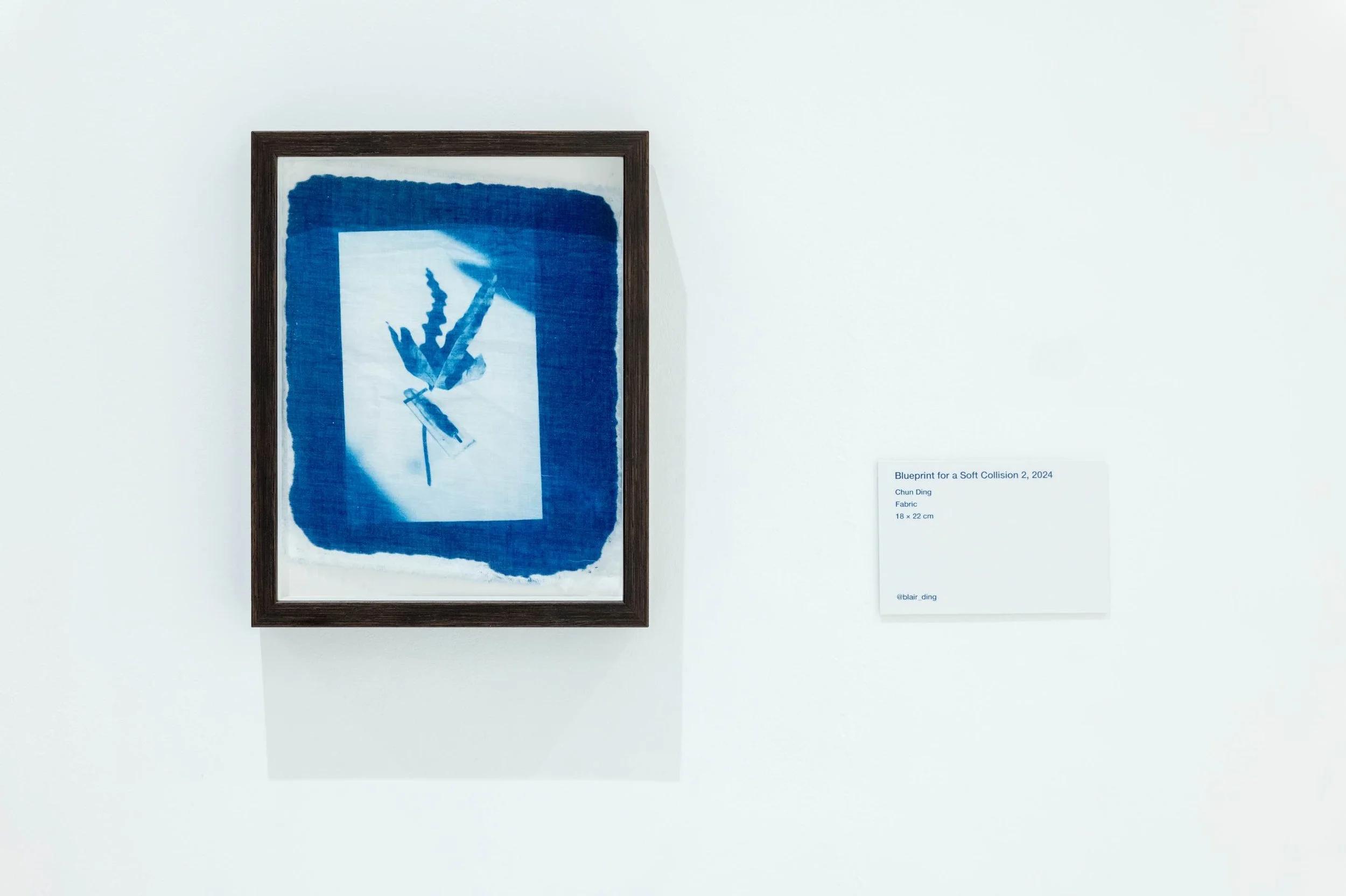
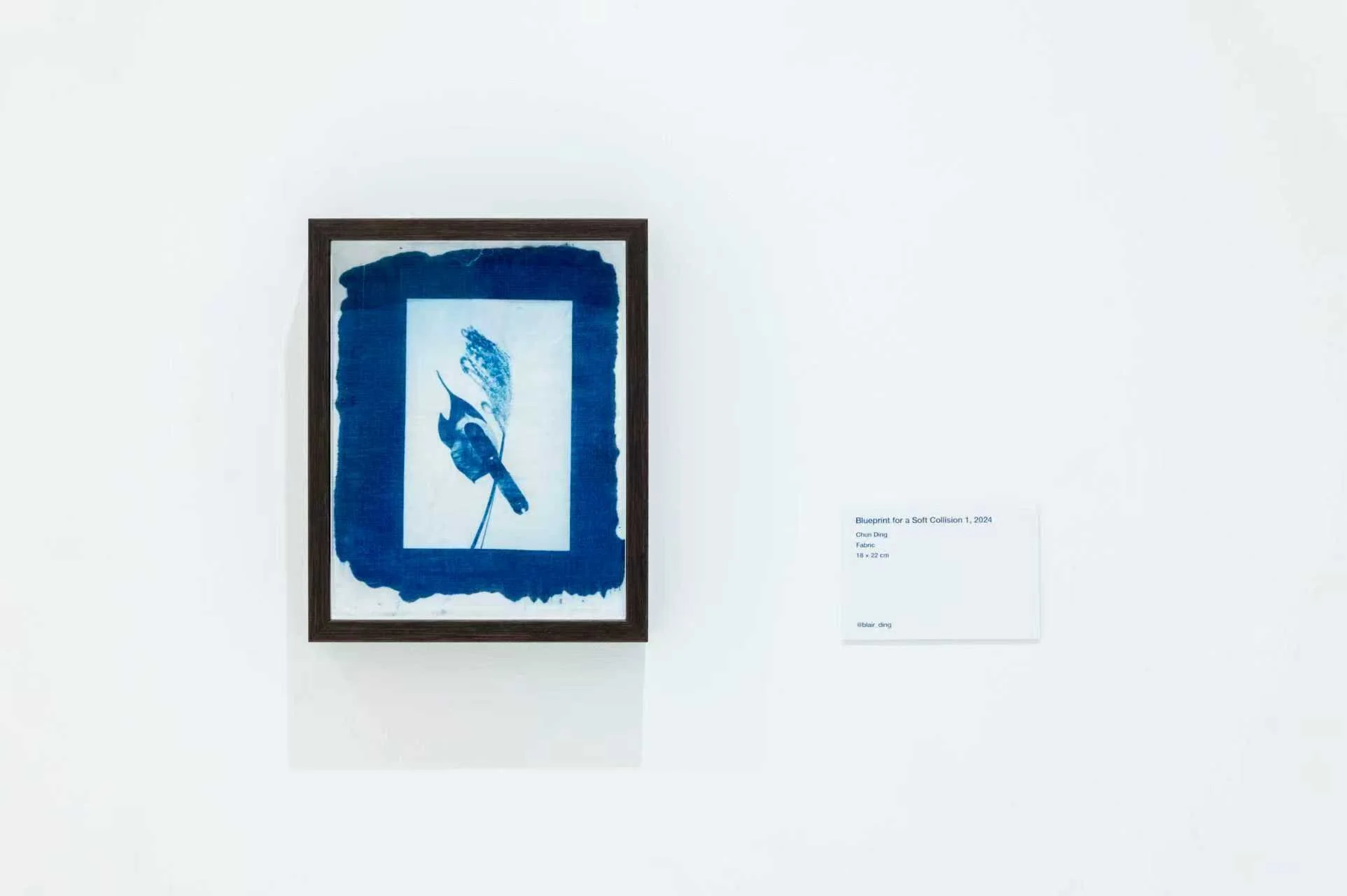
This contemplation of the structure of viewing transforms in Blueprint for a Soft Collision (2024) into an exploration of the relationship between material and image. Employing cyanotype techniques, the artist superimposes fragments of plants and mechanical traces onto fabric, where the contours of feathers, reeds, and tattoo needles intertwine. The fabric's folds, fibres, and stitches retain the entire process of image formation, rendering the work both pictorial and physically present. Nature and technology do not achieve equilibrium here, but coexist within the composition through a subtle, persistent tension.
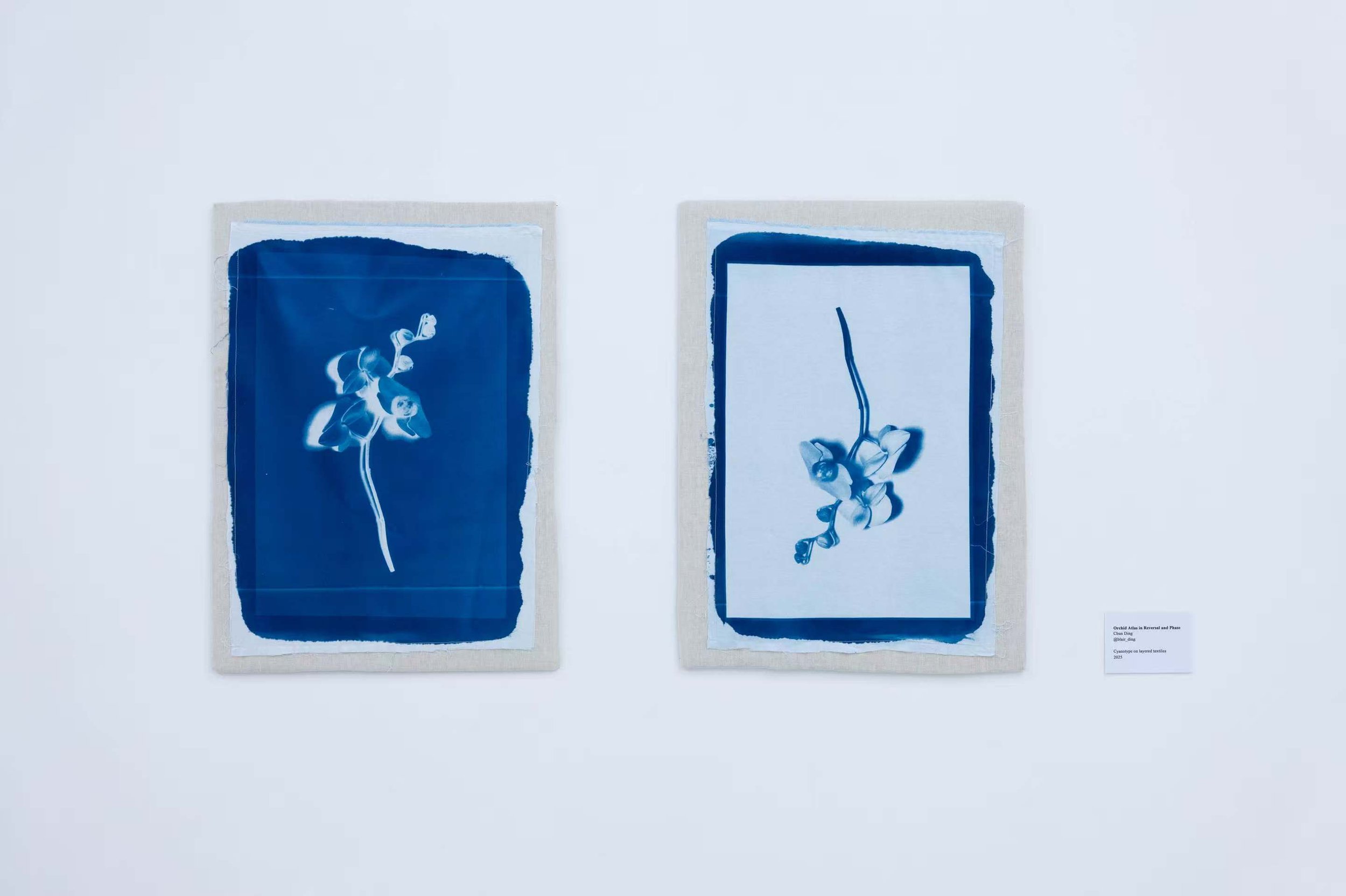
In Orchid Atlas in Reversal and Phase (2025), Chun Ding further subjects the botanical atlas knowledge system itself to reflection. Through the inversion of positive and negative images and the layering of fabric, orchid images escape the fate of categorisation and naming, lingering between appearance and disappearance. The stitched fabric functions as a tactile archive, transforming viewing into a bodily experience extended through time.
Chun Ding's work does by no means aim to narrate or assert, but rather persistently constructs a slow and open visual state. Her images refuse immediacy and certainty, inviting the viewer to linger within instability, to perceive structure within softness, and to discern how light, time, and emotion interact within the minutiae.